
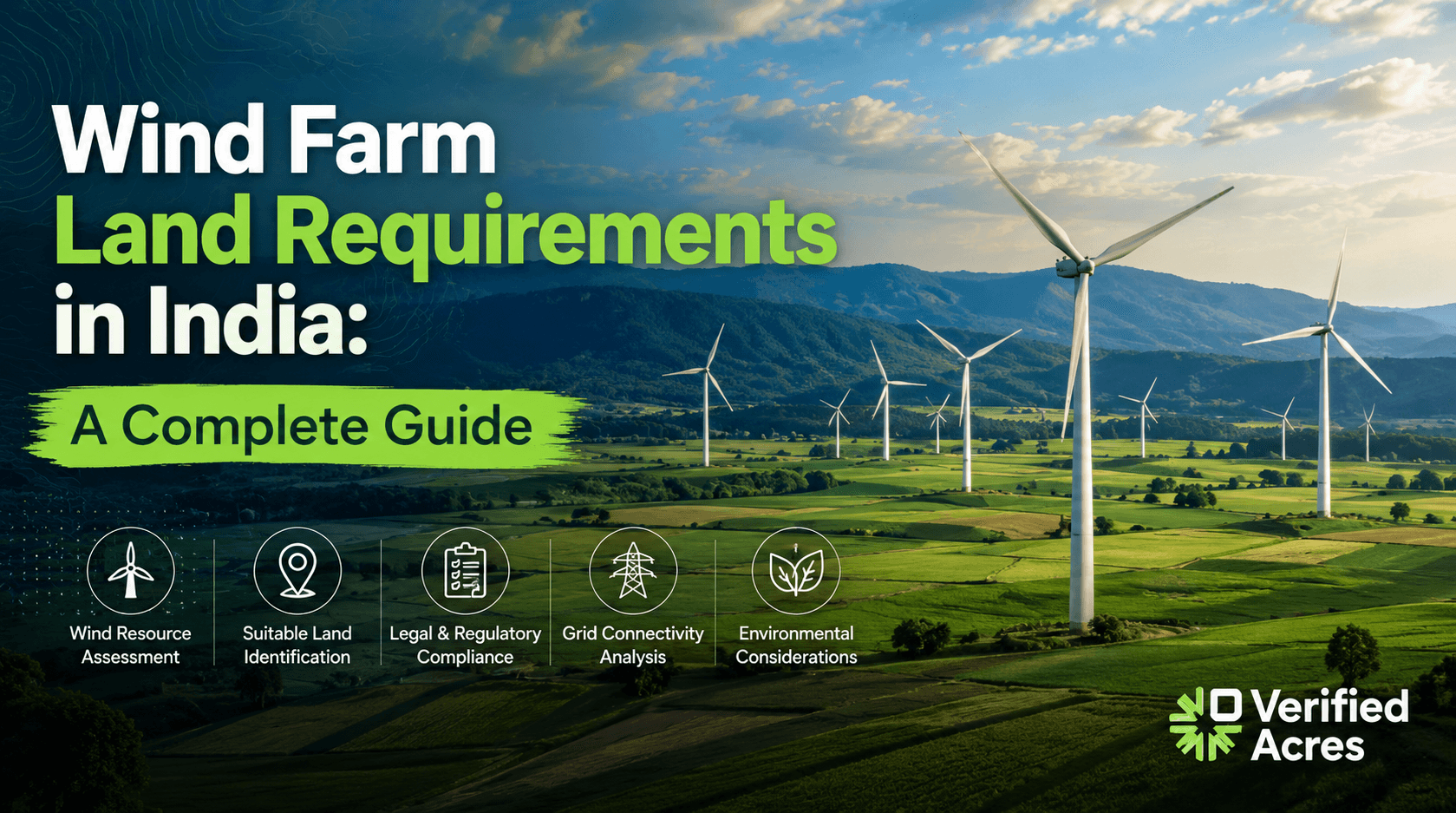
India’s renewable energy sector has changed a lot over the last decade. While solar energy often gets most of the attention, wind power continues to remain one of the strongest contributors to clean energy generation in the country. Large wind farms are now common across states like Gujarat, Tamil Nadu, Karnataka, Rajasthan, and Maharashtra.
But behind every successful wind project, there’s one thing that matters more than most people realize the land.
Many projects look good during the early planning stage but run into problems later because the land was not evaluated properly. Sometimes the issue is poor road connectivity. In other cases, it may be unclear ownership records, difficult terrain, or transmission infrastructure located too far away. These challenges can delay a project for months and increase costs significantly.
That’s exactly why land selection has become such an important part of renewable energy planning in India.
Today, developers are no longer relying only on local brokers or basic site visits. They want proper land intelligence, technical assessment, and legal verification before investing in any project. Companies like Verified Acres are helping renewable developers make this process more structured and transparent by simplifying renewable land discovery and verification.
Why Land Matters So Much in Wind Energy Projects
In wind projects, land is not simply a place where turbines are installed.
The location directly impacts:
Energy generation performance
Construction cost
Transportation feasibility
Grid connectivity
Approval timelines
Long-term maintenance
Even if the wind resource is excellent, the project can still become financially difficult if the land creates operational or legal complications later.
For example, some sites may have strong wind speeds but poor transmission access. That means developers may need to spend heavily on new evacuation infrastructure. Similarly, land disputes or environmental restrictions can slow down approvals and financing.
Because of this, experienced renewable companies spend a lot of time studying land before making any acquisition decisions.
Understanding Wind Farm Land Requirements India
When developers evaluate wind farm land requirements in India, they usually look at several factors together instead of checking only one thing.
1. Wind Availability Is the First Priority
This is obviously the most important part of any wind project.
Without strong and consistent wind flow, the project simply won’t perform efficiently. Before selecting a location, developers normally conduct detailed wind assessments using:
Wind mast studies
Historical wind data
GIS mapping
Satellite analysis
Seasonal wind pattern studies
In India, certain regions naturally perform better for wind energy projects because of their geography and weather conditions.
States that continue attracting major wind investments include:
Gujarat
Tamil Nadu
Karnataka
Rajasthan
Maharashtra
Andhra Pradesh
These regions have strong wind corridors and improving renewable energy infrastructure.
A large land parcel alone is never enough. The wind quality must support long-term energy generation.
2. Land Size and Turbine Spacing
Wind farms need more space than many people expect.
Unlike solar panels, wind turbines cannot be installed too close to one another because it affects airflow and energy efficiency. Proper spacing between turbines is extremely important.
The actual land requirement depends on:
Turbine capacity
Rotor diameter
Wind direction
Terrain condition
Internal road planning
Even though the turbine foundation itself occupies limited space, the surrounding spacing requirement increases the total land area significantly.
Developers usually prefer large continuous land parcels because fragmented land ownership creates acquisition and operational difficulties later.
3. Terrain Plays a Big Role
Terrain condition can completely change the economics of a wind project.
Interestingly, wind farms are often developed in elevated or semi-hilly regions because these locations may offer stronger wind speeds. However, difficult terrain can also increase construction complexity.
Uneven land may lead to:
Higher civil work expenses
Complex turbine foundation work
Transportation challenges
Additional road development cost
Before finalizing land for wind power projects, developers usually carry out:
Topographical surveys
Soil testing
Slope analysis
Flood-risk evaluation
These studies help determine whether the site is technically suitable for long-term development.
4. Transmission Connectivity Cannot Be Ignored
One of the most common mistakes in renewable projects is underestimating grid connectivity.
A wind-rich location without nearby transmission infrastructure can quickly become expensive. Developers generally check:
Nearby substations
Existing transmission lines
Grid capacity availability
Future evacuation feasibility
If the nearest substation is located too far away, infrastructure costs can rise sharply.
In many situations, slightly more expensive land near transmission infrastructure turns out to be a much better investment than cheaper remote land.
5. Legal Verification Is Critical
This is probably one of the most sensitive stages of renewable land acquisition in India.
Even if the site looks technically perfect, ownership issues can create major complications later. Developers usually verify:
Title ownership
Revenue records
Mutation entries
Encumbrance certificates
Existing disputes
Land-use classification
In rural areas, ownership often involves multiple family members or inheritance-related complications. Ignoring these details can delay projects for a very long time.
This is why legal due diligence now happens much earlier during project planning.
6. Environmental Restrictions Must Be Checked Early
Not every windy area can be used for renewable development.
Some locations may fall under:
Forest land
Wildlife-sensitive zones
Coastal regulation areas
Defense-restricted regions
Eco-sensitive zones
Wind farms may also require aviation approvals depending on turbine height and location.
Developers prefer identifying environmental risks at the beginning itself instead of discovering them during the approval stage.
That saves both time and money.
7. Accessibility Makes a Huge Difference
Transporting wind turbine components is not easy.
Blades, towers, and nacelles are extremely large and require proper road infrastructure for transportation.
Developers usually evaluate:
Road connectivity
Turning radius availability
Bridge strength
Logistics feasibility
Nearby workforce access
Remote locations may offer lower land prices, but transportation and operational costs can become much higher.
Good accessibility reduces both construction delays and maintenance challenges in the long run.
Technology Is Changing Renewable Land Discovery
A few years ago, most renewable developers depended heavily on local brokers and manual land surveys.
That approach still exists, but the industry is changing quickly.
Today, companies want:
GIS-based land screening
Wind resource mapping
Legal verification support
Environmental overlay analysis
Grid proximity visibility
Data-driven land intelligence
This is where platforms like Verified Acres are becoming increasingly useful. Instead of depending only on traditional sourcing methods, developers can now evaluate multiple technical and legal factors much earlier in the process.
That reduces project risk and improves decision-making.
Common Mistakes Developers Often Make
Even experienced renewable companies sometimes make avoidable mistakes during land acquisition.
Choosing Land Only Because It’s Cheap
Low land cost may later result in higher infrastructure and transportation expenses.
Ignoring Grid Connectivity
Transmission planning should never be treated as a secondary factor.
Rushing Legal Due Diligence
Incomplete ownership verification often creates future disputes.
Underestimating Terrain Complexity
Difficult terrain can increase engineering and civil costs significantly.
Delaying Environmental Checks
Late-stage environmental issues can delay projects for months.
Final Thoughts
The future of wind energy in India looks very promising, but successful projects begin long before turbines are installed. Everything starts with selecting the right land.
Understanding actual wind farm land requirements India developers face is extremely important for reducing project risk and improving long-term returns. Wind availability, terrain suitability, legal clarity, transmission connectivity, and environmental feasibility all play a major role in project success.
Choosing the right land for wind power projects is ultimately about avoiding future complications and building a renewable asset that remains sustainable and profitable for years.
Verified Acres Team
A dedicated team of renewable energy and land intelligence experts committed to simplifying land acquisition for developers across India.
1. How much land is required for a wind farm in India?
The requirement depends on turbine size, spacing, and terrain conditions. Wind farms generally require large areas because turbines must be placed at safe distances from one another.
2. Which Indian states are best for wind energy projects?
Gujarat, Tamil Nadu, Karnataka, Rajasthan, Maharashtra, and Andhra Pradesh are among the most preferred states for wind energy development.
3. Why is transmission connectivity important in wind projects?
Transmission connectivity affects the cost of power evacuation. Poor grid access can significantly increase infrastructure expenses.
4. What legal checks are required before acquiring wind farm land?
Developers usually verify title ownership, revenue records, mutation entries, encumbrance certificates, land-use classification, and any ongoing disputes.
5. Can agricultural land be used for wind farms?
Yes, but developers may need land-use conversion approvals depending on local state regulations.
6. Why is terrain analysis important in wind projects?
Terrain affects construction cost, turbine transportation, road development, and foundation design.
7. What environmental restrictions can affect wind farm projects?
Projects may face restrictions in forest zones, wildlife-sensitive areas, coastal regions, defense zones, and eco-sensitive locations.
8. How is technology helping renewable land selection today?
Developers now use GIS mapping, wind resource analysis, satellite imagery, legal verification tools, and renewable land intelligence platforms to identify suitable project sites more efficiently.
Share this post: