
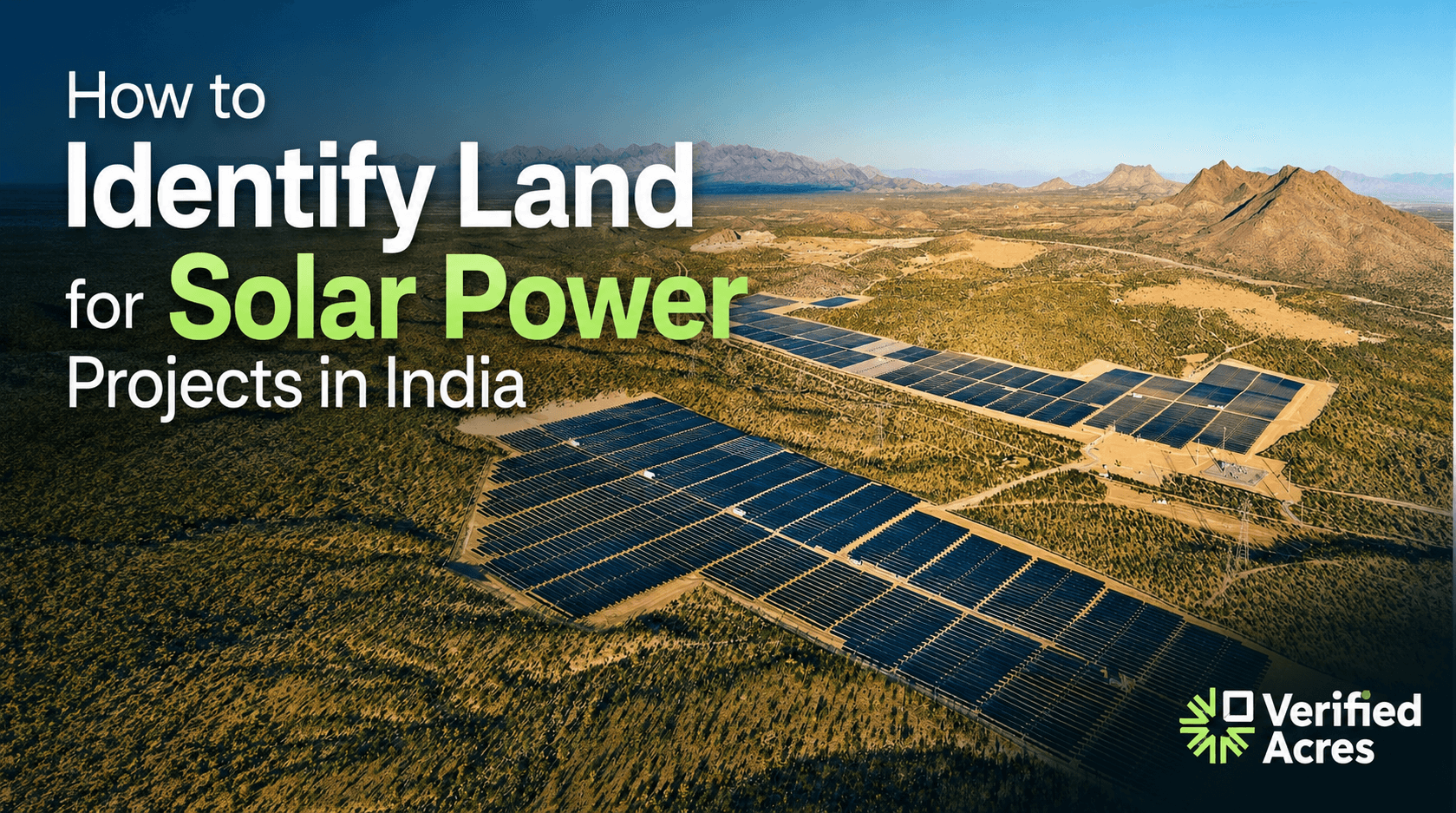
India’s solar industry has changed dramatically over the last few years. Large solar parks are coming up across states like Gujarat, Rajasthan, Maharashtra, and Andhra Pradesh, while many private developers are also looking for suitable land parcels for independent solar projects. But finding the right land for solar power project development is not as easy as it sounds.
A piece of land may look perfect on paper, but once detailed checks begin, developers often discover problems like unclear ownership, poor transmission connectivity, environmental restrictions, or uneven terrain. These issues can delay projects for months and sometimes even stop them completely.
That is why land identification has become one of the most important parts of renewable energy planning in India. Developers are now paying much more attention to proper due diligence, technical feasibility, and land intelligence before making any investment decisions.
Platforms like Verified Acres are helping renewable energy companies simplify this process by offering data-driven land discovery and verification support for renewable projects.
Why Choosing the Right Land Matters
In solar energy projects, land is not just a location where panels are installed. The quality and suitability of the land directly affect:
Project cost
Power generation efficiency
Construction timeline
Grid connectivity
Regulatory approvals
Long-term profitability
Even a technically strong solar project can become financially difficult if the land creates unnecessary complications later.
For example, if the site is too far from a transmission substation, the evacuation infrastructure cost may increase significantly. Similarly, if the land has legal disputes or environmental limitations, developers may face delays during approvals and financing.
This is why experienced renewable energy companies spend a considerable amount of time evaluating land before finalizing any deal.
Understanding Solar Project Land Requirements India
Every utility-scale solar project starts with a basic question: Does the land actually meet the required conditions for development?
When discussing solar project land requirements India, several important factors must be considered together instead of individually.
1. Land Size and Shape
The first requirement is obviously land availability.
In most utility-scale projects, developers generally require:
Around 4 to 5 acres per MW for fixed tilt systems
Around 5 to 6 acres per MW for tracker-based systems
However, total requirement also depends on:
Terrain condition
Internal road planning
Drainage systems
Panel arrangement
Substation area
Large contiguous parcels are usually preferred because fragmented land ownership creates acquisition and documentation challenges.
A single connected parcel also makes engineering and maintenance easier in the long run.
2. Solar Irradiation Availability
One of the key steps in solar farm land selection is checking the solar resource potential of the location.
Areas with strong sunlight exposure generate more electricity and improve project returns. This is one of the reasons why western and southern Indian states are highly preferred for solar projects.
States like:
Rajasthan
Gujarat
Tamil Nadu
Karnataka
Andhra Pradesh
continue to attract large-scale solar investments due to favorable irradiation levels and improving renewable infrastructure.
Today, developers use GIS mapping and solar resource data to compare locations before conducting physical visits.
3. Distance from Transmission Infrastructure
Many first-time investors underestimate this factor.
A good solar site without proper power evacuation infrastructure can quickly become an expensive project.
Before finalizing any land for solar power project, developers usually check:
Nearby substations
Transmission line availability
Grid capacity
Future evacuation feasibility
If the nearest substation is too far away, transmission infrastructure costs can increase heavily.
In practical terms, this means that slightly more expensive land near existing infrastructure may actually be a better investment than cheaper remote land.
This is where renewable land intelligence platforms are becoming useful because they help developers evaluate grid connectivity at an early stage instead of discovering problems later.
4. Land Ownership and Legal Verification
Legal verification is one of the most sensitive parts of solar land acquisition in India.
Even if the land appears technically suitable, unclear ownership records can create major problems later.
Developers generally verify:
Title documents
Mutation records
Encumbrance certificates
Revenue records
Land-use classification
Existing disputes or litigation
In many rural areas, land ownership may involve multiple family members or inheritance-related complications. Ignoring these details can delay acquisition for a very long time.
This is why proper documentation review is essential during the early stages of project planning.
5. Terrain and Soil Condition
Flat or gently sloping land is usually ideal for solar projects.
Uneven terrain increases:
Civil construction work
Mounting structure complexity
Drainage planning
Overall project cost
Rocky land can also increase foundation expenses significantly.
During solar farm land selection, developers often conduct topography and soil assessments to understand:
Elevation variations
Flood risk
Soil stability
Waterlogging possibility
These small details may not seem important initially, but they have a major impact on engineering and maintenance over the project’s lifetime.
6. Environmental and Regulatory Factors
Not every open land parcel can be used for renewable projects.
Some locations may fall under:
Forest zones
Wildlife-sensitive areas
Coastal regulation zones
Wetlands
Defense restrictions
Environmental clearance issues can become serious obstacles if they are identified too late.
Experienced developers usually prefer checking environmental overlays at the beginning itself rather than waiting until the approval stage.
This saves both time and money.
7. Accessibility and Local Infrastructure
A solar project requires constant movement of:
Heavy machinery
Solar modules
Mounting structures
Construction equipment
So accessibility matters a lot.
The ideal site should have:
Proper road access
Nearby workforce availability
Basic infrastructure support
Water availability for cleaning operations
Remote locations may offer lower land costs, but transportation and operational expenses can rise significantly.
Technology Is Changing Renewable Land Discovery
Earlier, most renewable developers depended heavily on local brokers and manual surveys to identify land.
While that approach still exists, the industry is gradually shifting toward technology-based land intelligence systems.
Today, developers want:
Faster land screening
GIS-based analysis
Legal verification support
Environmental risk visibility
Grid proximity data
This is one of the reasons platforms like Verified Acres are gaining attention in the renewable sector. Instead of relying only on traditional land sourcing methods, developers can now evaluate multiple technical and legal parameters before proceeding with acquisition discussions.
The process becomes more structured and transparent.
Common Mistakes Developers Should Avoid
Even experienced companies sometimes make avoidable mistakes during land acquisition.
Some of the most common ones include:
Focusing Only on Low Land Price
Cheap land may create higher transmission or development costs later.
Ignoring Local Community Factors
Resistance from local communities can slow down projects significantly.
Incomplete Due Diligence
Skipping legal or environmental checks often creates future complications.
Selecting Land Without Grid Planning
Transmission connectivity should never be treated as a secondary factor.
Rushing the Acquisition Process
Quick decisions without technical assessment can increase project risk.
Final Thoughts
The success of a solar project starts long before the first solar panel is installed. It begins with identifying the right land.
A proper evaluation process helps developers avoid legal issues, reduce infrastructure costs, and improve long-term project viability. As renewable energy investments continue to grow in India, the importance of accurate and data-driven solar farm land selection will only increase.
Understanding the real solar project land requirements India needs is essential for anyone planning utility-scale renewable development. Whether it is irradiation analysis, terrain study, grid connectivity, or legal verification, every factor plays a critical role.
Choosing the right land for solar power project development is ultimately about reducing risk and building a project that remains sustainable and profitable for years to come.
Verified Acres Team
Verified Acres Team
A dedicated team of renewable energy and land intelligence experts committed to simplifying land acquisition for developers across India.
1. What type of land is best for solar power projects in India?
The best land for solar projects is usually flat or gently sloping land with high solar irradiation, good road access, and nearby transmission infrastructure. Developers also prefer large contiguous parcels to simplify construction and legal processes.
2. How much land is required for a utility-scale solar project?
In most cases, solar project land requirements India developers follow are:
4 to 5 acres per MW for fixed tilt systems
5 to 6 acres per MW for tracker-based systems
However, actual land requirements may vary depending on terrain, panel layout, drainage planning, and substation space.
3. Why is transmission connectivity important in solar farm land selection?
Transmission connectivity directly affects project cost and feasibility. If a solar site is far from a substation or transmission line, developers may need to spend heavily on power evacuation infrastructure. This can significantly increase the overall project investment.
4. Which Indian states are most suitable for solar power projects?
States with strong solar irradiation and growing renewable infrastructure are generally preferred, including:
Rajasthan
Gujarat
Karnataka
Tamil Nadu
Andhra Pradesh
These regions continue to attract major renewable energy investments.
5. What legal checks are required before purchasing land for solar projects?
Before finalizing any land for solar power project development, developers typically verify:
Title documents
Revenue records
Mutation entries
Encumbrance certificates
Land-use classification
Existing disputes or litigation
Proper legal due diligence helps avoid delays and ownership conflicts later.
6. Can agricultural land be used for solar projects in India?
Yes, but it depends on state-specific regulations and land conversion policies. In many cases, agricultural land must be converted for non-agricultural or industrial use before solar project development can begin.
7. Why is terrain analysis important in solar project planning?
Uneven or rocky terrain increases:
Civil construction costs
Foundation complexity
Drainage requirements
Installation challenges
This is why developers perform topography and soil studies during solar farm land selection.
8. What environmental restrictions can affect solar land development?
Some land parcels may fall under:
Forest zones
Wildlife-sensitive areas
Wetlands
Coastal regulation zones
Defense-restricted regions
Environmental clearance challenges can delay or stop projects if these risks are identified late.
9. How does technology help in renewable land identification?
Modern renewable developers now use:
GIS mapping
Satellite imagery
Solar irradiation analysis
Grid connectivity data
Land intelligence platforms
These tools help identify technically and legally suitable land much faster than traditional broker-based methods.
10. How does Verified Acres help renewable energy developers?
Verified Acres helps renewable energy companies simplify land discovery through data-driven land intelligence, technical screening, and verification support. This helps developers evaluate land suitability, legal risks, and infrastructure connectivity before acquisition decisions are made.
11. What are the biggest mistakes developers make during solar land acquisition?
Some common mistakes include:
Selecting land only based on low price
Ignoring grid connectivity
Skipping legal due diligence
Overlooking environmental risks
Rushing acquisition without technical assessment
These issues can create long-term financial and operational problems.
12. Why is proper land identification critical for solar project success?
The right land improves:
Project profitability
Construction efficiency
Power generation output
Approval timelines
Long-term operational stability
A poorly selected site can increase costs and delay the entire project lifecycle.
Share this post: